

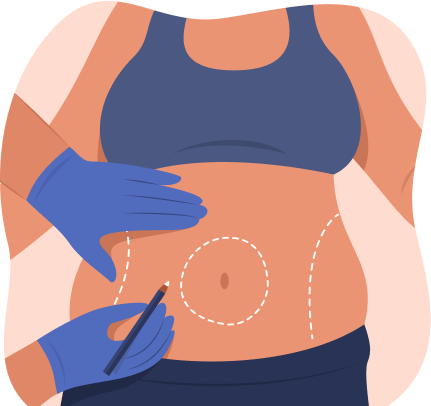
Tummy tuck surgery, medically known as abdominoplasty, is a surgical procedure performed to improve the contour of the abdomen by removing excess skin and fat and, where needed, tightening the abdominal wall muscles. It is commonly considered by people whose abdomen has changed after pregnancy, significant weight loss or ageing, and who have loose skin or a bulge that does not respond to diet and exercise.
A tummy tuck focuses on reshaping the abdomen rather than reducing overall body weight. It is not a treatment for obesity and does not remove visceral fat located deep inside the abdomen. The plan depends on factors such as skin elasticity, the amount of excess skin and fat, the condition of the abdominal muscles, previous surgeries and the patient’s goals. A tummy tuck leaves a scar, and results vary from person to person.
A consultation with a qualified plastic surgeon helps determine whether a tummy tuck is suitable and which approach is appropriate for your anatomy, health and expectations.
A tummy tuck focuses on the abdominal region, and the plan depends on which structures are contributing to the concern.
Different approaches are used depending on the amount of excess skin and fat, the muscle condition and the surgeon’s assessment.


Take the next step toward a smoother abdominal shape with tummy tuck surgery.
Tummy tuck surgery addresses stretched abdominal skin and separated muscles resulting from pregnancy or weight fluctuations. Dr. Priyanka Sharma ensures a flatter, firmer abdominal profile through meticulous surgical planning.

Tightening separated abdominal wall muscles (diastasis recti) to restore core strength and profile.

Eliminating loose, hanging skin and stubborn lower abdominal fat for a smoother contour.

Placing incisions carefully so they can be easily concealed under standard clothing or swimwear.

Choosing between full or mini-abdominoplasty options based on individual anatomical needs.

Detailed support through the healing stages, mobility progression, and garment usage.
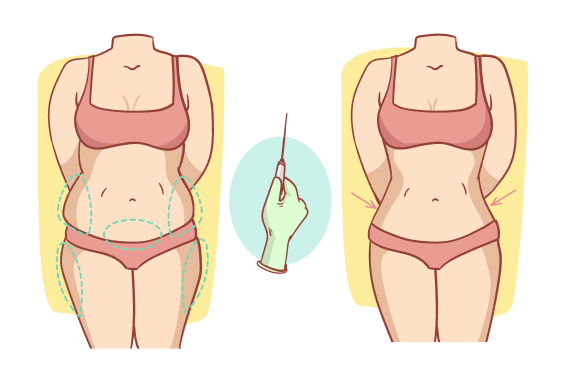
A tummy tuck may be considered for adults whose abdominal skin or muscles have changed in a way that does not respond to a healthy lifestyle. Suitability depends on an individual medical assessment and not on appearance alone. A tummy tuck may be considered in the following situations:
A tummy tuck may not be appropriate for people who plan future pregnancies or substantial weight loss, who smoke, who have certain medical conditions, or who have unrealistic expectations. It is not a substitute for weight loss. Smoking can seriously affect wound healing and usually needs to be stopped well before surgery.
A consultation allows the surgeon to review your medical history, examine the abdomen and decide whether a tummy tuck is an appropriate option.
The exact procedure varies with the amount of excess skin and fat, the muscle condition and the selected technique. The main stages generally include the following.
The surgeon discusses your goals, medical history, pregnancies, previous surgeries, current medicines and weight history. The abdomen is examined for skin quality, muscle separation and any hernia, and photographs may be taken for planning.
If surgery is appropriate, you will receive instructions about medicines, food and fluid intake, smoking and other preparations. Necessary investigations are arranged according to your health and the planned procedure.
A tummy tuck is usually performed under general anaesthesia. The choice depends on the extent of surgery and the patient’s health.
An incision is made low on the abdomen, and another around the navel in a full tummy tuck. The skin and fat are lifted, the abdominal muscles are tightened if required, and excess skin and fat are removed.
The remaining skin is repositioned and the incisions are closed. The navel is brought out through a new opening. Drains may be placed to collect fluid, and a compression garment is applied to support the abdomen.
The duration of surgery and the length of hospital stay depend on the extent of the procedure, the anaesthesia used and your recovery immediately afterwards.
Recovery varies from person to person. The abdomen may feel swollen, tight, bruised and tender for a period after surgery. Your surgeon will provide instructions based on the extent of the procedure and your progress.
Some discomfort, swelling, bruising and a pulling sensation across the abdomen may occur. Take prescribed medicines as directed, care for the incisions and drains as instructed, and follow advice on posture and walking.
Drains may be placed to remove fluid and are taken out when the output reduces, as advised. A compression garment is usually worn for a specified period to support the tissues and help manage swelling. Follow your surgeon’s instructions on fit and duration.
Walking is usually encouraged early to support circulation. Strenuous exercise, heavy lifting and activities that strain the abdomen should be avoided until your surgeon confirms that it is appropriate to return to them.
Swelling can take several weeks to months to settle, and the abdomen may feel firm or numb in places during healing. The scar matures over many months. The final result emerges gradually, and the time needed varies with individual healing.
Follow-up visits allow the surgeon to assess healing, monitor swelling, remove drains and address any concerns. Contact your surgical team if you develop increasing pain, spreading redness, fever, unusual discharge, wound opening or one-sided leg swelling. Breathing difficulty or chest pain requires urgent medical attention.
Maintaining a stable weight and following healthy lifestyle habits can help preserve the result achieved through surgery.
No. A tummy tuck is a body-contouring procedure designed to remove excess skin and fat and tighten the abdominal wall. It is not intended to treat obesity or replace a healthy diet, physical activity or medically supervised weight management.
Dr. Priyanka Sharma provides expert tummy tuck and body-contouring consultations at Kaayantar in Ahmedabad. Patients can discuss personal goals, customized surgical approaches, and expected recovery milestones in a private consultation.
Clinic Address: Kaayantar, Ground Floor, Urban Canopy, Chhanalal Joshi Road, Sindhu Bhavan Marg, PRL Colony, Bodakdev, Ahmedabad, Gujarat 380058.
 Chat With Expert