

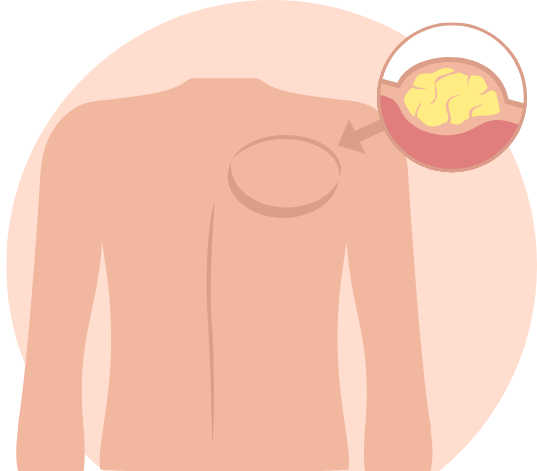
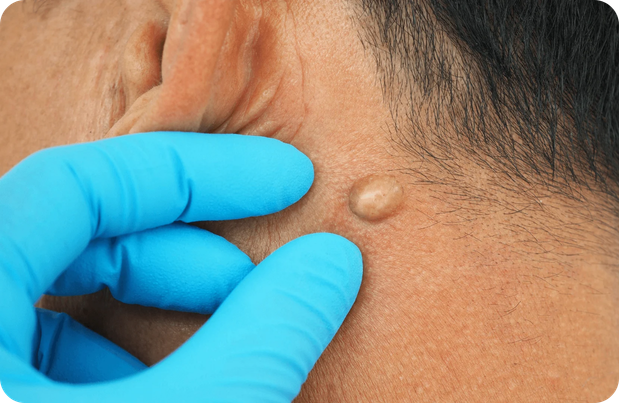
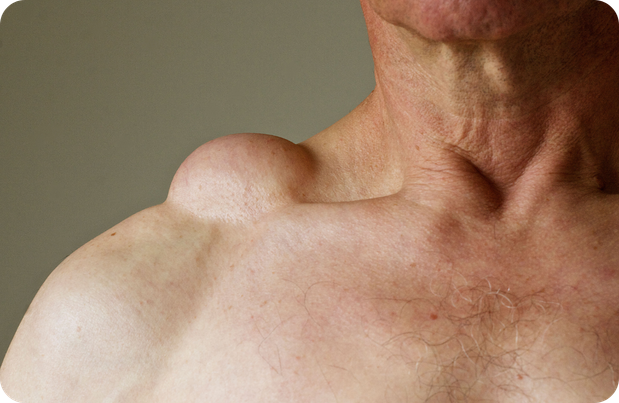
A lipoma is a non-cancerous growth made up of fat cells that develops beneath the skin. It usually feels soft, moves slightly when touched, and grows slowly. Lipomas commonly appear on the neck, shoulders, back, arms, thighs, or torso. Most are painless and do not require removal unless they cause discomfort, restrict movement, increase in size, or create another clinical concern.
Lipoma removal surgery involves removing the growth through an incision in the skin. The approach depends on the size, depth, location, and characteristics of the lump. Many superficial lipomas can be removed through a minor surgical procedure under local anaesthesia. Larger, deeper, or unusually located lumps may require further investigation and a different surgical plan.
Not every lump beneath the skin is a lipoma. At Kaayantar, patients considering lipoma removal surgery in Ahmedabad receive an assessment of the lump, an explanation of available treatment options, and clear information about recovery and expected results under Dr. Priyanka Sharma.
Most lipomas do not need treatment, but removal may be considered when symptoms or changes develop.
Get expert advice on lipoma removal surgery and explore suitable treatment options.
A lipoma is a growth of fatty tissue that is usually benign. Removal may be considered when a lump causes discomfort, restricts movement, changes in appearance, or requires further evaluation. Consultation helps establish whether the lump is consistent with a lipoma and whether removal is appropriate.

The consultation considers the lump's size, location, growth pattern, tenderness, and other clinical features.

Some lumps may require imaging or additional investigation before treatment, particularly when their features are unusual or the diagnosis is uncertain.

Patients can learn about the proposed technique, anaesthesia requirements, incision placement, and whether the procedure can be performed as a minor surgical intervention.

Possible complications include bleeding, infection, scarring, changes in sensation, and recurrence depending on the type and location of the lump.

Wound care instructions and follow-up help monitor healing. Removed tissue may be sent for examination when clinically indicated.

Care is selected strictly based on the lump's size, depth, location, and structural characteristics.
Suitability is based on diagnosis, lump characteristics, location, and clinical necessity:
Patients must disclose medical conditions, bleeding tendencies, and current medications before proceeding with surgical excision.
Performed with meticulous surgical precision, standard treatment stages include:
Evaluating lump history, size, depth, mobility, and symptom presence on physical assessment.
Ordering ultrasound or MRI scans when depth or diagnosis requires confirmation before surgery.
Setting scar boundaries, explaining risks, securing consent, and administering local or general anaesthesia.
Incising the skin, dissecting tissues, and removing the growth along with its capsule safely.
Closing with fine sutures, dressing the site, and sending tissue for histopathology examination when indicated.
A non-cancerous growth of fat cells located beneath the skin that grows slowly and feels soft and mobile.
Subcutaneous lumps require thorough clinical assessment before surgical decisions. Dr. Priyanka Sharma at Kaayantar provides comprehensive evaluation, diagnostic imaging guidance, and precise excision care for soft-tissue growths.
Clinic Address: Kaayantar, Ground Floor, Urban Canopy, Chhanalal Joshi Road, Sindhu Bhavan Marg, PRL Colony, Bodakdev, Ahmedabad, Gujarat 380058.