

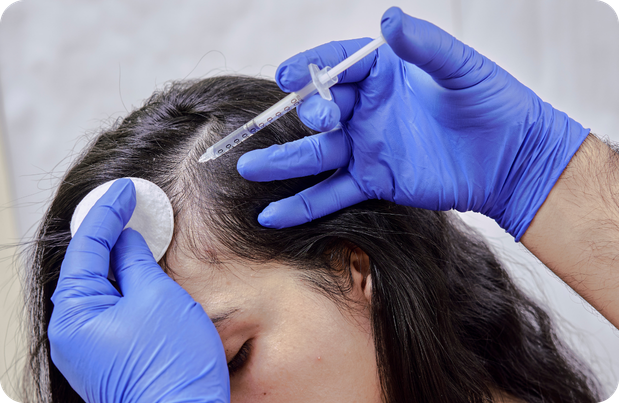
Hair PRP treatment, or platelet-rich plasma therapy, is a procedure that uses a concentrated portion of a patient's own blood to support the treatment of certain types of hair loss. The blood is collected and processed to separate platelet-rich plasma, which contains platelets and growth factors. This plasma is then injected into selected areas of the scalp.
PRP is used as a non-surgical treatment option for some patients with hair thinning, particularly those with androgenetic alopecia, also known as pattern hair loss. The aim is to support hair follicle activity and potentially improve hair density and thickness. Results vary, and PRP does not restore hair in every type of hair loss or guarantee new hair growth.
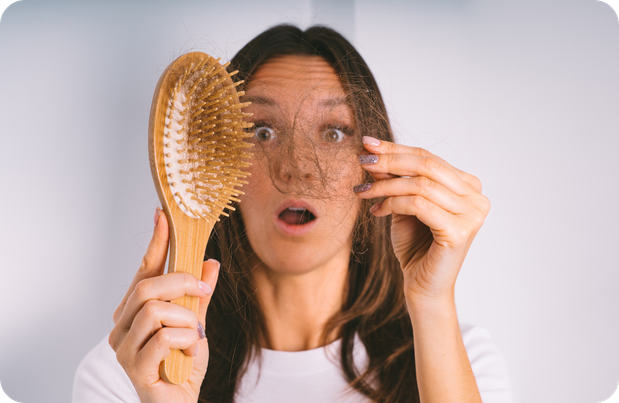
Hair thinning can occur for several reasons, including hereditary factors, hormonal changes, nutritional deficiencies, certain illnesses, medications and scalp conditions. Identifying the cause is important before choosing treatment. During consultation, Dr. Priyanka Sharma can assess the pattern of hair loss and discuss whether PRP treatment is suitable.
PRP may be considered by people experiencing certain forms of hair thinning who want to explore a non-surgical treatment option.
Get expert advice on Hair PRP Treatment and find out if it is right for you.
Platelet-rich plasma (PRP) treatment uses a preparation made from the patient's own blood and may be considered for selected types of hair loss. A consultation helps determine whether PRP is an appropriate option or whether another investigation or treatment may be needed.

The consultation considers the pattern and duration of hair loss, scalp condition, medical history, and possible contributing factors.

PRP may be more appropriate for some patients than others. The likely role of treatment depends on the type and stage of hair loss.

Patients can learn how blood is collected, processed, and administered to the scalp, along with the usual treatment-session considerations.

The discussion covers the variable response to PRP, the possibility of multiple sessions, and the fact that improvement cannot be guaranteed.

Where appropriate, patients can discuss other medical or procedural approaches and whether further assessment is needed.

PRP treatment methods vary in blood processing and preparation protocols tailored to clinical requirements.
Suitability is evaluated via consultation when hair thinning causes are identified and active follicles remain:
Underlying issues like thyroid imbalances or iron deficiencies should be investigated and managed prior to starting PRP sessions.
Administered as an outpatient procedure, standard treatment steps involve:
Reviewing hair-loss history, medical profile, baseline clinical photographs, and scaling patterns.
Defining session counts, expected timelines, goals, and evaluating potential lab requirements.
Drawing a small, safe volume of blood from a peripheral arm vein using standard clinical precautions.
Processing the sample via a centrifuge system to concentrate platelets cleanly under strict sterile protocols.
Cleaning the area, applying comfort measures if needed, and introducing the isolated PRP via micro-needles.
Costs depend on session counts, area size, and preparation kits used, determined precisely during your consultation.
Hair thinning can stem from multiple factors, requiring careful diagnosis before treatment selection. Dr. Priyanka Sharma at Kaayantar provides expert evaluations to determine if hair PRP therapy is suitable for your specific profile and hair restoration goals.
Clinic Address: Kaayantar, Ground Floor, Urban Canopy, Chhanalal Joshi Road, Sindhu Bhavan Marg, PRL Colony, Bodakdev, Ahmedabad, Gujarat 380058.