Friday, 9 January, 2026
Let me start by clearing something up, because it often gets misunderstood.
Gender transition isn’t something people arrive at casually. It doesn’t come from trends, timelines, or outside influence. For many, it’s a quiet awareness that builds over time, sometimes acknowledged early, sometimes pushed aside for years, but rarely sudden.
Choosing to align one’s body with their gender identity isn’t about being seen differently by others. It’s about how it feels to exist in your own body. The relief of recognition. The comfort of familiarity. The simple ability to look in the mirror and not feel disconnected from what you see.
In my practice in Ahmedabad, I meet people at very different points in this process. Some come in with nothing but questions and uncertainty. Some are already on hormone therapy and trying to understand what comes next. Others arrive after years of internal debate, having reached a place where they feel ready to move forward. There is no correct order, no fixed timeline, and certainly no single way to approach transition.
That’s why I prefer to speak about gender change surgery, also referred to as sex change surgery or gender transition surgery, without dramatic language or oversimplification. This is medical care, yes, but it’s also deeply personal, and it deserves a grounded, respectful conversation.
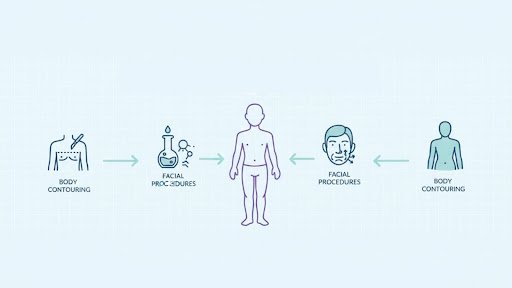
One important thing to understand is that gender change surgery isn’t a single operation. It’s a collective term that covers a range of possible treatments. For some individuals, this may mean chest surgery. For others, facial procedures, body contouring, genital reconstruction, or hormone therapy play a role. Many choose a combination of these steps. Some choose only one. Some choose none at all.
None of these choices is more “correct” than the others. Transition isn’t something you complete or finish. It’s about deciding what feels appropriate for you, medically, emotionally, and practically, at any given point in time.
Plastic surgery is often part of this process, particularly when it comes to external appearance and body proportions. But I always make one thing clear during consultations: surgery does not define identity. It simply supports alignment.
Being recognised as one of the best plastic surgeons in Ahmedabad is not about numbers or dramatic transformations. It’s about judgment, knowing when intervention is helpful, when restraint is better, and when listening is more important than planning surgery. Skill matters, of course, but sensitivity matters just as much. Understanding what someone hopes to feel after surgery is far more meaningful than aiming for a striking visual change.
Within gender-affirming care, plastic surgeons may be involved in chest masculinisation or breast augmentation, facial feminisation or masculinisation, body contouring, and aesthetic refinement following other procedures. The intention is never exaggeration. The focus is proportion, harmony, and results that sit comfortably with the individual rather than drawing attention to the surgery itself.
Mental health professionals are often misunderstood in this process. Psychiatrists and psychologists are not there to challenge or “test” someone’s identity. Their role is much quieter than that. They help people talk through emotions that may have been sitting there for years, deal with family or social pressure, and mentally prepare for a journey that can be both exciting and exhausting. They also handle the formal assessments and paperwork needed before surgery, which helps ensure that decisions are made thoughtfully, not impulsively.
Hormone therapy is usually the next conversation, and this is where endocrinologists step in. Estrogen or testosterone isn’t just about physical change; it affects mood, energy, skin, fat distribution, hair growth, and even how someone experiences their body day to day. Because these changes unfold over time, hormone therapy needs close supervision. It also plays a big role in surgical planning, which is why hormone treatment and surgery are never treated as separate, isolated steps.
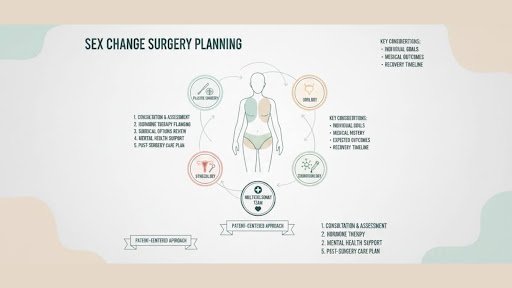
When someone decides to explore genital reconstruction, it’s never treated as a standalone step. These surgeries, whether it’s vaginoplasty, phalloplasty, or metoidioplasty, require detailed planning and a clear understanding of what life after surgery will look like. The focus isn’t just on appearance. Comfort, sensation, daily function, and long-term health are just as important. This is why plastic surgeons work closely with urologists and gynecologists during this stage. No single specialty carries the responsibility alone, and that collaboration makes a real difference to outcomes.
What I often find, though, is that people are far more prepared for the idea of surgery than for what comes after it. Recovery doesn’t always get the attention it deserves. The body needs time to adapt, and healing rarely follows a perfectly straight line. Anesthesiologists, nursing teams, and post-operative caregivers are deeply involved during this phase. Pain control, routine checks, managing small setbacks, and even simple reassurance all play a role. Surgery may be completed in a day, but recovery becomes part of everyday life for a while.
Safety is naturally one of the most common concerns people have when they start researching gender change surgery. And it’s an important question to ask. When procedures are planned carefully, performed by experienced specialists, and supported by proper follow-up, they are considered medically safe. Similar to any other surgical procedure, the result here too is dependent on factors like preparations, honesty, and transparency in discussions and expectations that are based on reality. Rushing decisions or skipping steps is where problems tend to arise, not the surgery itself.
This is also why selecting the best plastic surgeon in Ahmedabad, or anywhere else, shouldn’t go beyond what you see online. Photographs and visibility don’t show how a surgeon communicates, how they handle complications, or how involved they remain during recovery. Trust is built through conversations, transparency, and knowing that your surgeon respects the weight of the decision you’re making and is willing to walk the journey with you, not just perform the procedure and move on.
There’s also an emotional shift that happens after surgery, one that isn’t talked about enough. Many people describe a sense of relief or alignment, sometimes quietly, sometimes all at once. At the same time, healing takes time. Some days feel reassuring, others feel uncertain. That fluctuation is normal, and it’s part of settling into change.
For me, gender transition surgery isn’t about becoming someone different.It’s about allowing space for who you already are. As a doctor, my responsibility is not to define identity. It is to provide safe, ethical, and compassionate medical care, and to support patients through a decision that carries both medical and emotional significance. If you’re considering gender change surgery, or even quietly thinking about it, know this: you deserve clarity, respect, and a medical team that sees you as a person first, not a procedure.
Warmly,
Dr. Priyanka Sharma
Plastic Surgeon, Ahmedabad